Case Study
MedicinaSimplificada
Medicina simplificada is a passion project in progress. It looks at a different method or approach to help rural communities in Guatemala own their health through citizen triage.
Type
Passion Project
Focus
Rural Healthcare Access
Country
Guatemala
Status
In Progress
Impact at a glance
80% of healthcare in 50% of the geography.
Problem
Rural populations in Guatemala have little access to adequate healthcare and widespread distrust of the public system; they need ways to own their health and seek care sooner.
Approach
Research in context, stakeholder mapping, experience mapping, and participatory design to define a citizen-triage approach for rural communities.
Outcome
A product vision and design direction for a portal that helps rural populations engage with health resources and triage their needs.
Context
Guatemala at a Glance
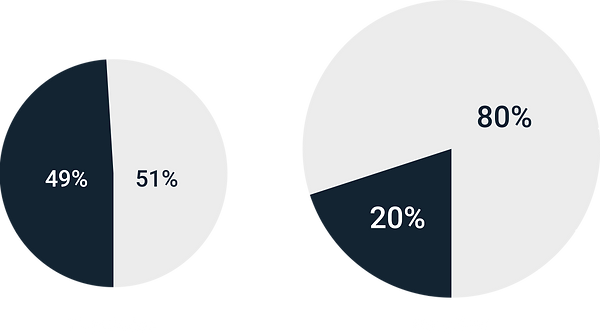
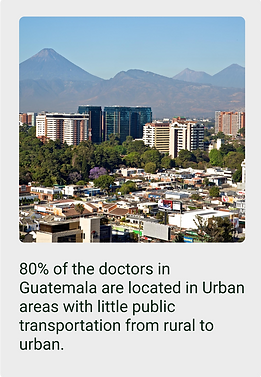
The population of Guatemala is almost evenly distributed with half living in rural areas and the other half living in urban areas. However, 80% of hospital and healthcare is located in urban areas.
Private vs. public
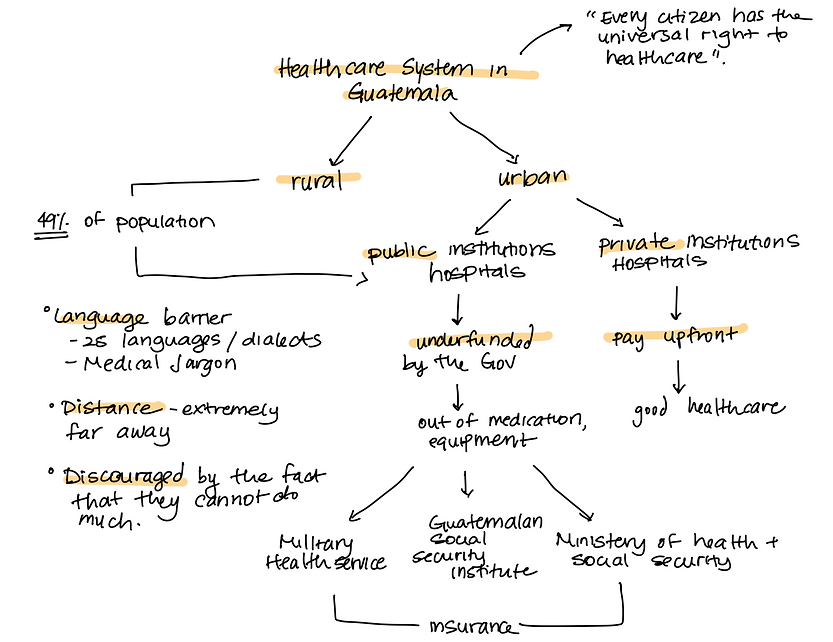
Guatemala provides great healthcare for those who can afford private institutions, but almost half the population lives in poverty.
Deep distrust
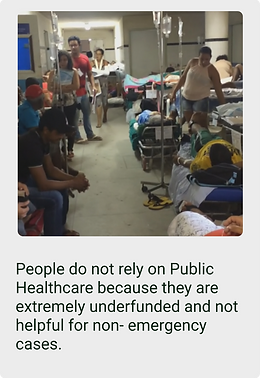
Continued failure and negative experiences with the public system have created a vast distrust in rural areas.
Stakeholder analysis
Who is in the system?
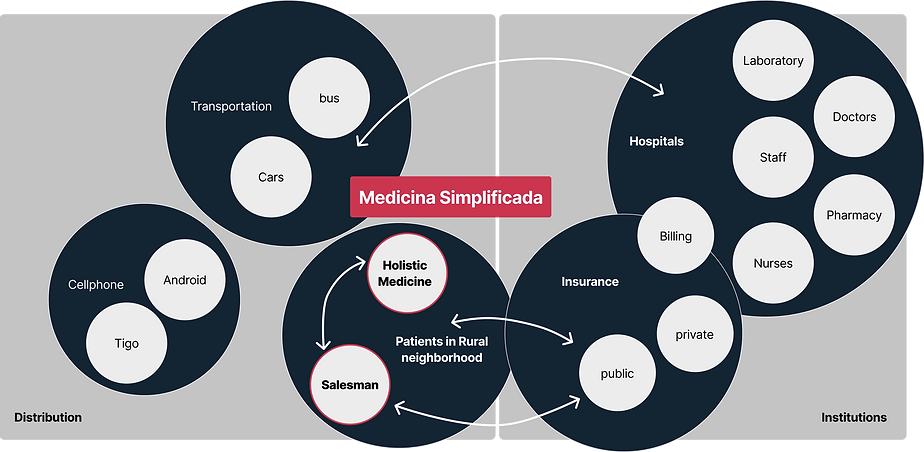
A dive through the stakeholder analysis showed that people tended to rely on outside organizations to receive healthcare or reach out to members of the community, the "Salesman", for holistic medicine.
Informal network
Community "salesmen" fill the healthcare gap. They are trusted and accessible, but limited in clinical scope.
System gap
No touchpoint bridges informal community health and the formal medical system for rural residents.
Experience mapping
Waveline: pain to care
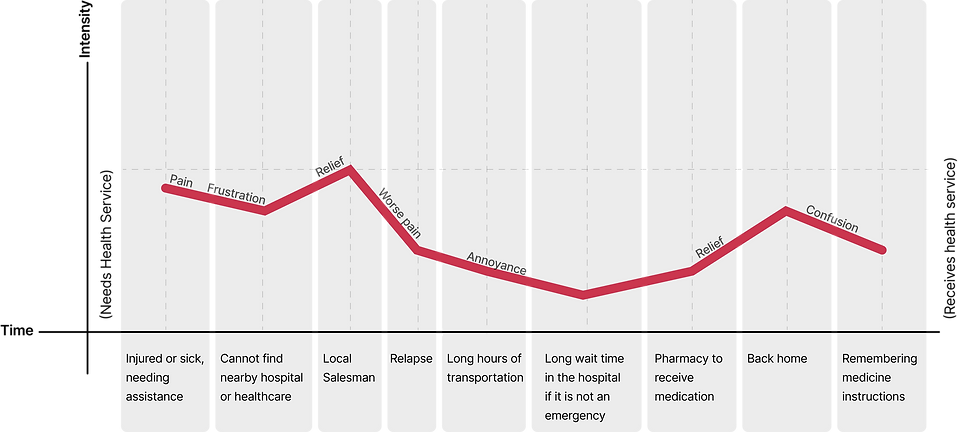
We mapped out the experience and the pain points involved from needing healthcare to receiving it. The pain points dipped when their pain relapsed after visiting a "salesman" and having no other choice but to make a long commute to the hospital, wait a long time, and then travel to a pharmacy to receive medication.
Insights
Three things that matter most
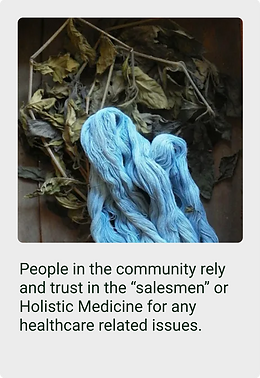
Through a combination of survey, interview, stakeholder analysis and waveline we uncovered three insights: the community relies on and trusts the "salesman" for holistic medicine; there is a deep distrust against public hospitals; and 80% of adequate healthcare is located in urban areas with little to no public transportation connecting rural communities to the city.
Experience map
Designing for the youth who triage
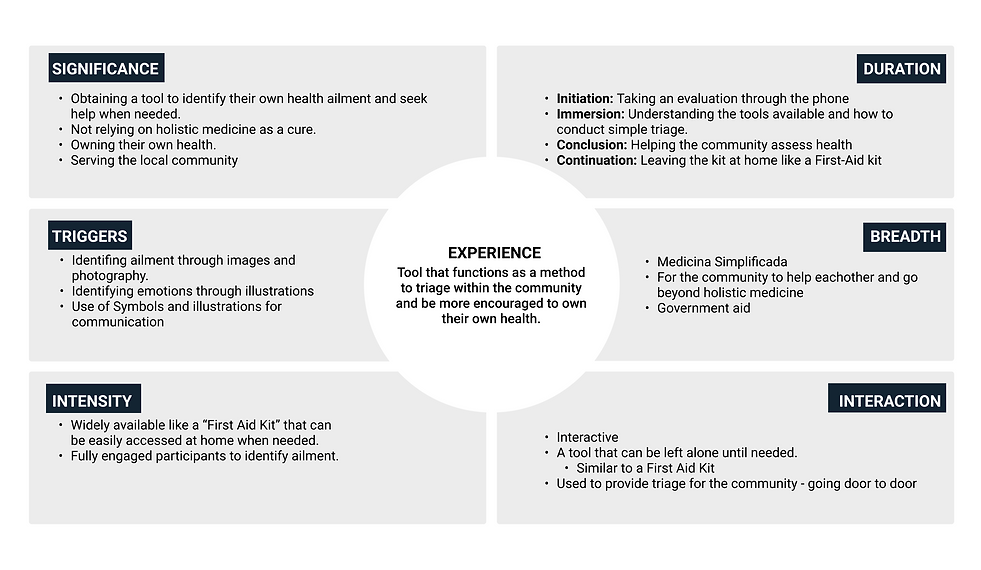
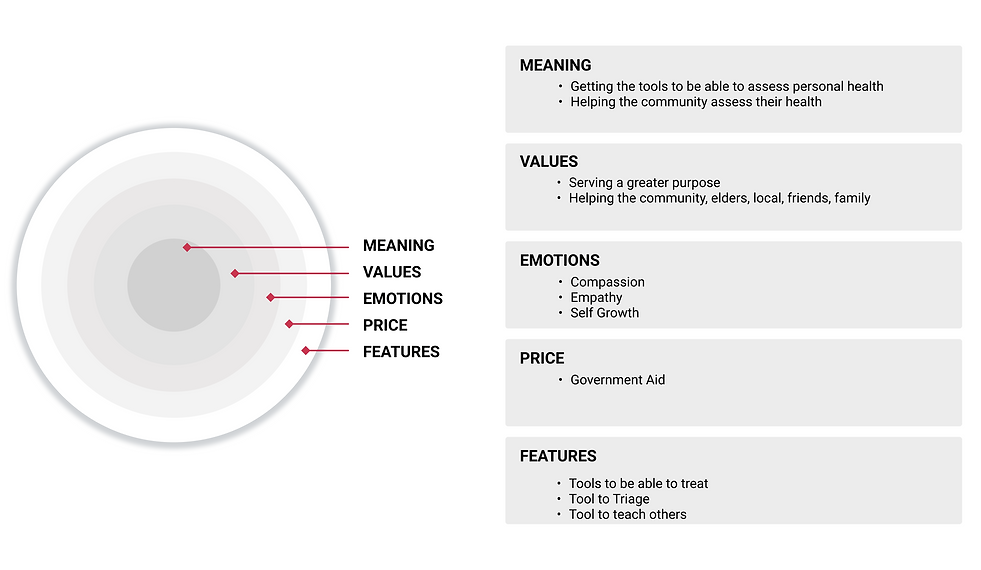
I mapped out the experience to have a better understanding of how the person would interact with the proposed solution and why the interaction would be meaningful or successful. What would be the tools that they would receive, the significance, and so on.
The value proposition relies on the fact that community members would be helping each other to grow, and serving a greater purpose. This map focused on what this means for the youth who will be conducting triage within their community.
Youth as agents
Young community members are trained to perform basic triage, building local health capacity from within.
Community trust
Peer-to-peer health support leverages existing trust networks rather than trying to override them.
Triage flow
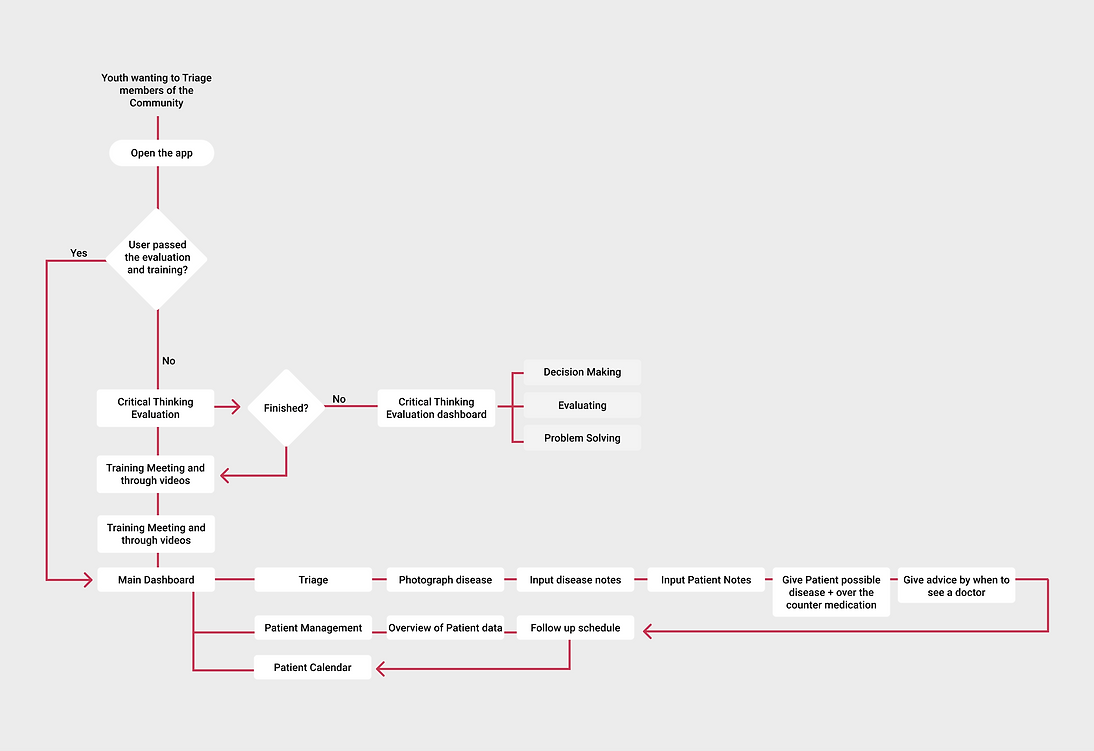
Simple decision tree guides the citizen triager through assessment and appropriate referral.
Escalation path
Clear escalation triggers define when cases need formal medical attention, protecting both patient and triager.
Solution
A portal for citizen triage
The product vision centers on a portal that empowers rural community members, especially youth, to perform structured, guided triage and connect their neighbors to the right resources before a condition becomes an emergency.
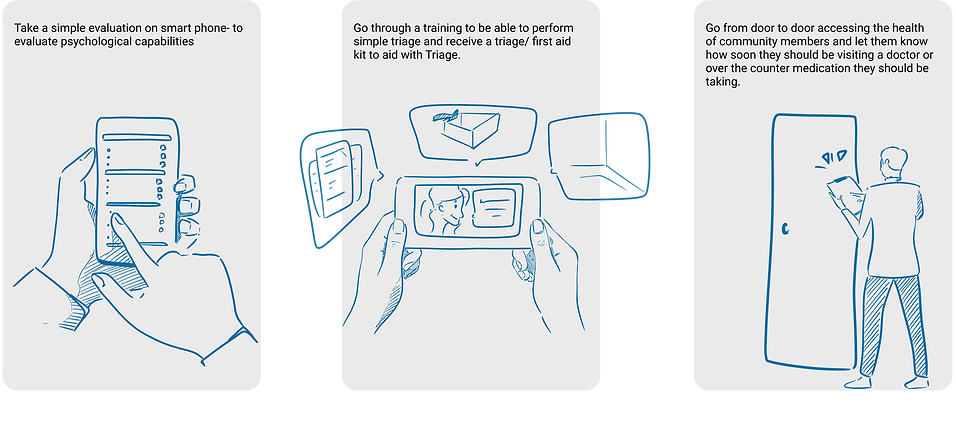
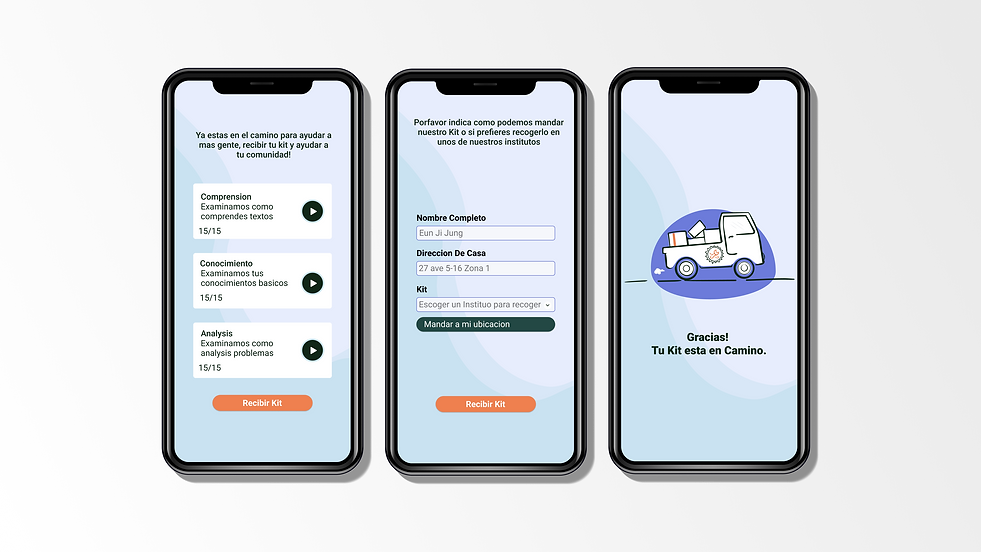
Guided assessment
Step-by-step symptom questions adapted for low-literacy contexts and offline use.
Resource directory
Localized list of available health resources, from community salesmen to nearest clinics.
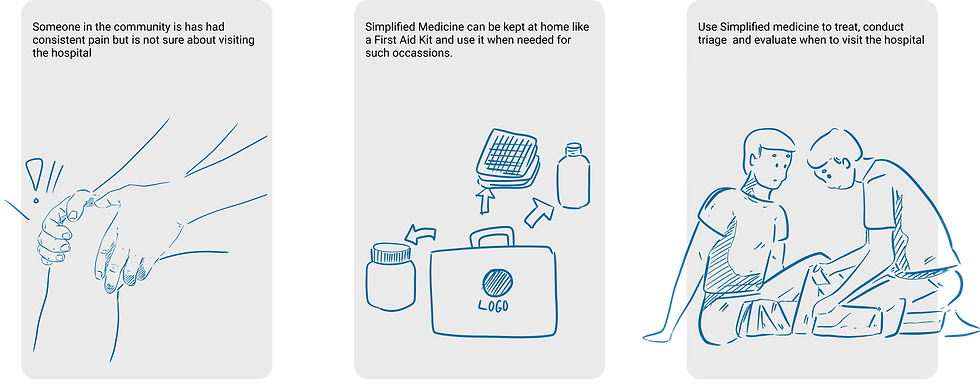
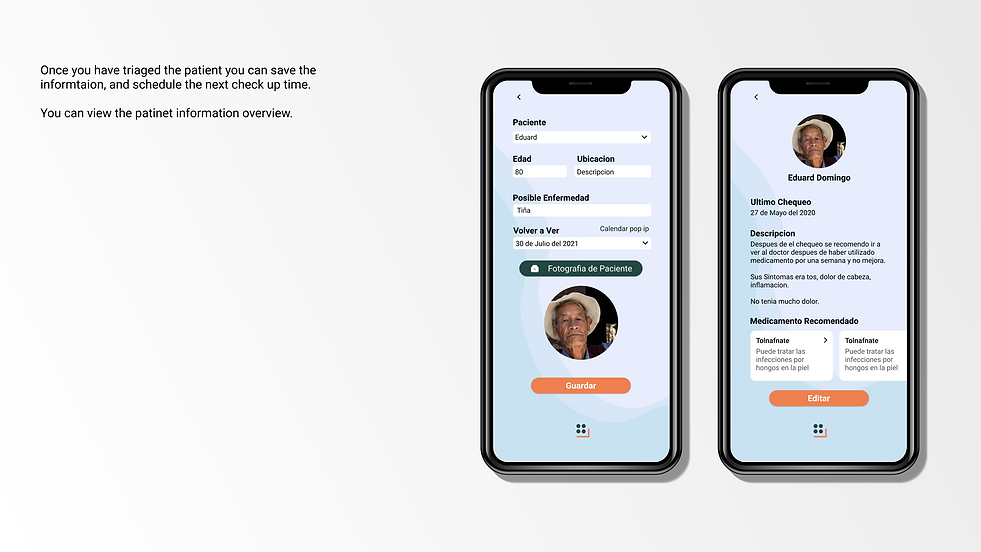
Referral handoff
When escalation is needed, the system generates a simple summary to bring to the clinic, reducing information loss.
Next steps
Still in progress.
This is a work in progress that needs a lot of user testing and research left. I want to spend more time re-designing the critical thinking evaluation. It could be a great opportunity to redesign how people learn.