Case Study
Imperishable
Imperishable came about from a research project. The research goal was to uncover how women perceive truth and authenticity from corporate messages on sustainability from 'fast fashion' brands. Imperishable makes sustainable apparel shopping more accessible.
Type
Research + Concept
Focus
Sustainable Fashion
Methods
Interviews · Contextual Inquiry
Impact at a glance
Convenience and aesthetics trump sustainability, until they don't.
Problem
People demand sustainability and transparency in apparel but convenience and aesthetics often win; sustainable shopping is not yet accessible enough.
Approach
Research on how women perceive truth and authenticity in fast-fashion sustainability messaging; empathy mapping, insights, and concept development.
Outcome
A product concept (Imperishable) that makes sustainable apparel shopping more accessible and aligns with how people actually make choices.
Overview
The accessibility gap in sustainable shopping
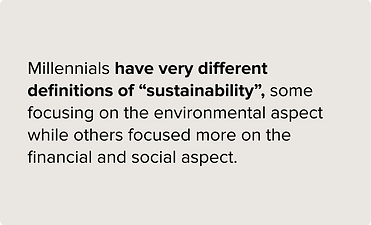
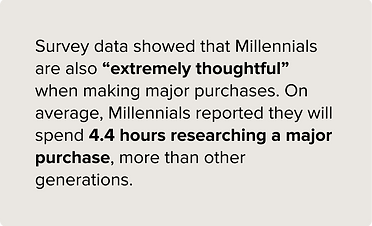
Sustainability and transparency are two of the most prominent demands when it comes to apparel, yet not a lot of people are actually purchasing ethical or sustainable apparel. After conducting research we found out that convenience and aesthetics triumph above all.
Goals
What we set out to do
Research plan
How we gathered evidence
- Desk Research. The initial secondary research was to have a framework of understanding before conducting qualitative interviews and contextual inquiry.
- Qualitative Interview. The interviews were conducted to collect in-depth information on participant opinions, behavior, and experience around sustainability and apparel.
- Contextual Inquiry. An additional research method was conducted to understand the decision-making process behind making an apparel purchase online.
Primary persona
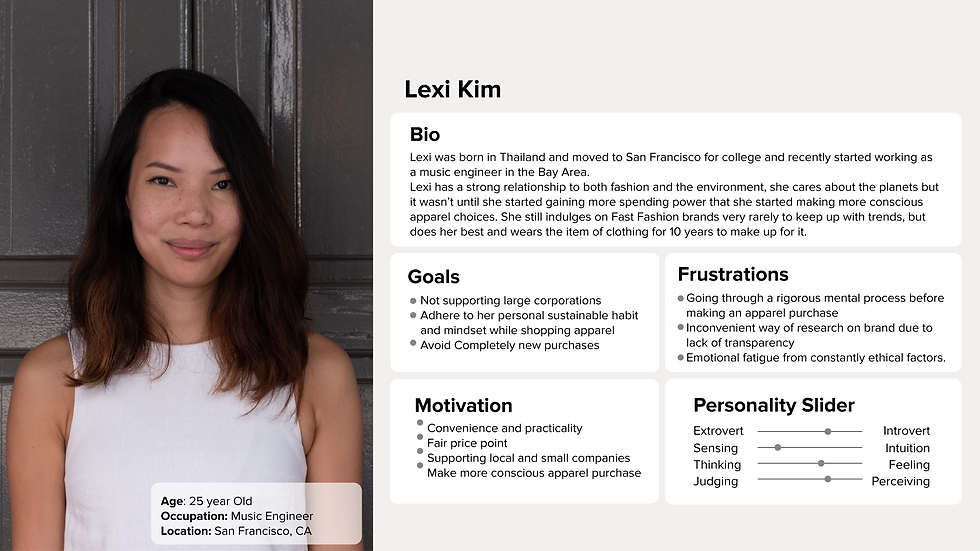
Values sustainability but defaults to fast fashion for convenience. That is the exact tension Imperishable needed to resolve.
Key tension
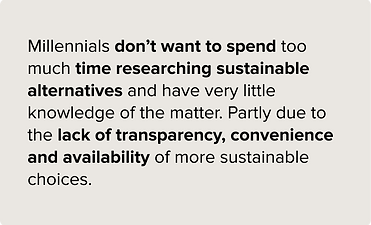
She wants to do the right thing but lacks the time and information to consistently make sustainable choices.
Empathy map
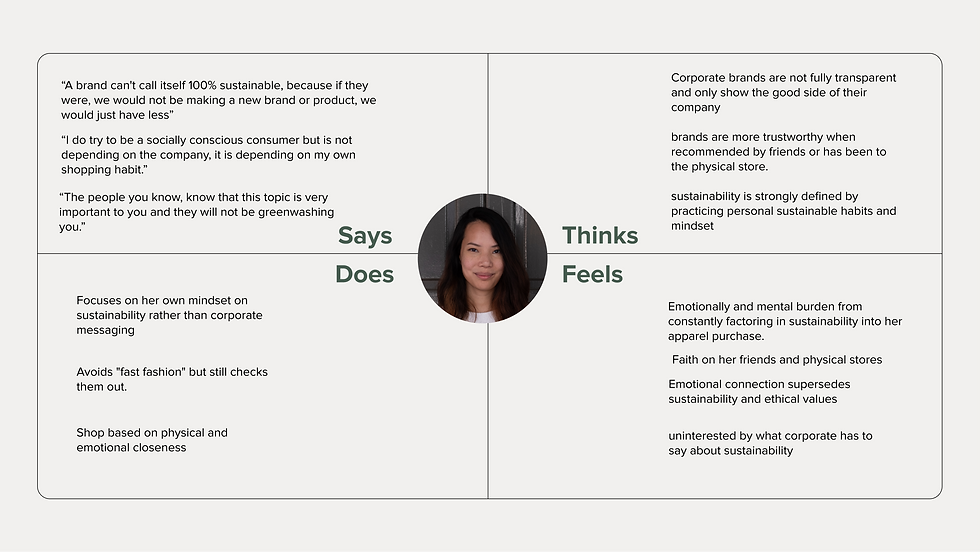
Four-quadrant map revealed a gap between what people say about sustainability and what they actually do.
Hidden barrier
Uncertainty about impact makes people disengage. If they can't see the difference, they don't bother.
Insights
Six things we learned
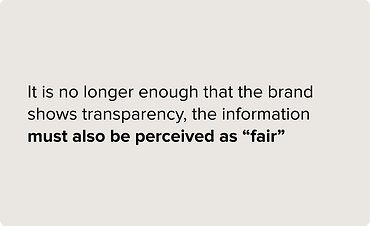
Opportunity
Three design directions
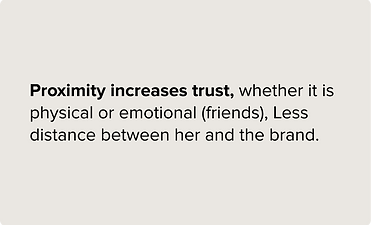
- Recommend sustainable alternatives based on proximity preference.
- Recommend apparel alternatives based on style and aesthetic preference.
- Cross-check information on other sites and apps to build trust.
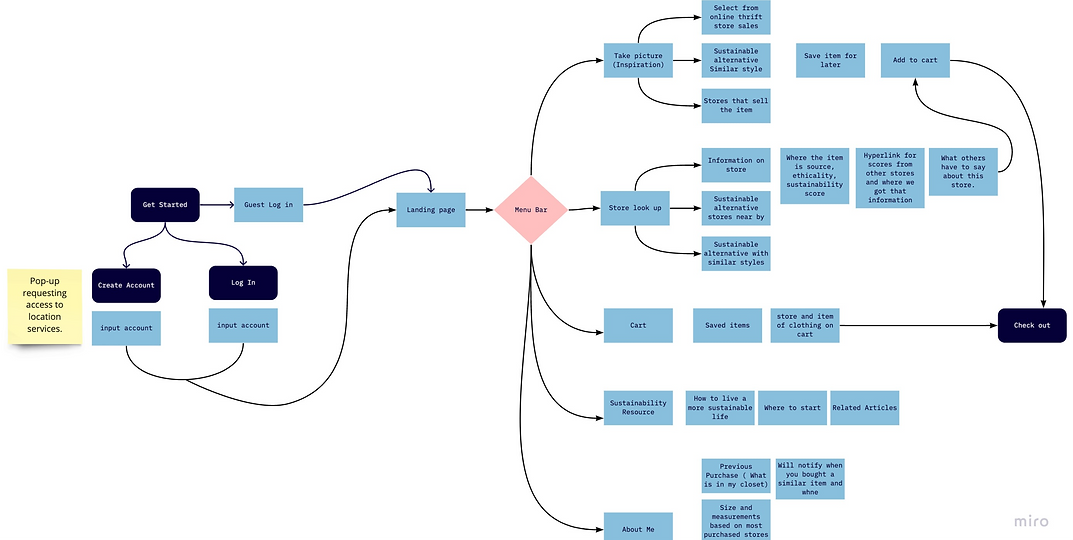
Flow diagram
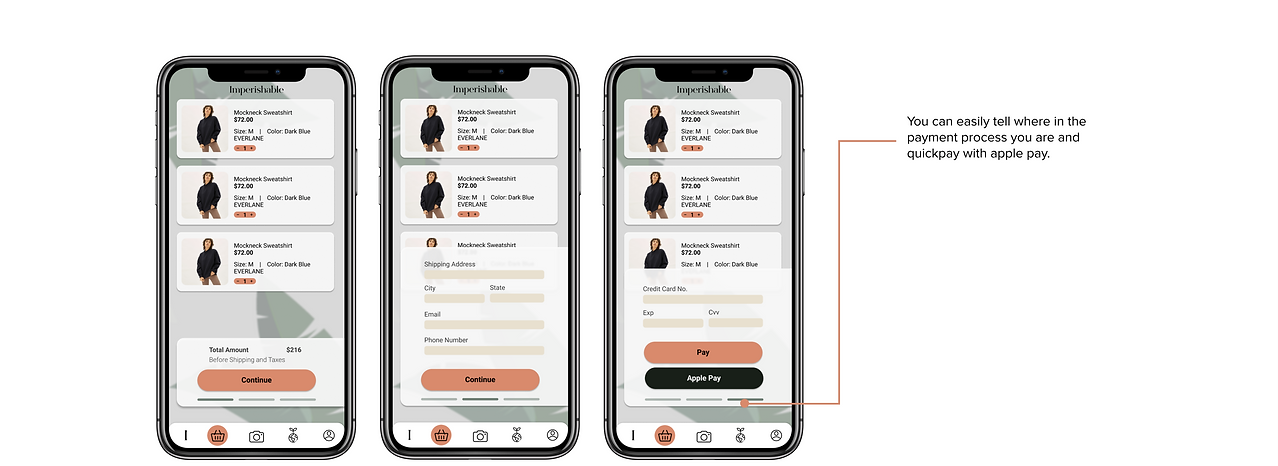
Maps the end-to-end journey from browsing to purchase, surfacing sustainable alternatives at the right moment.
Trust layer
Cross-referenced data appears inline, so users don't need to leave the app to verify claims.
Solution
Imperishable
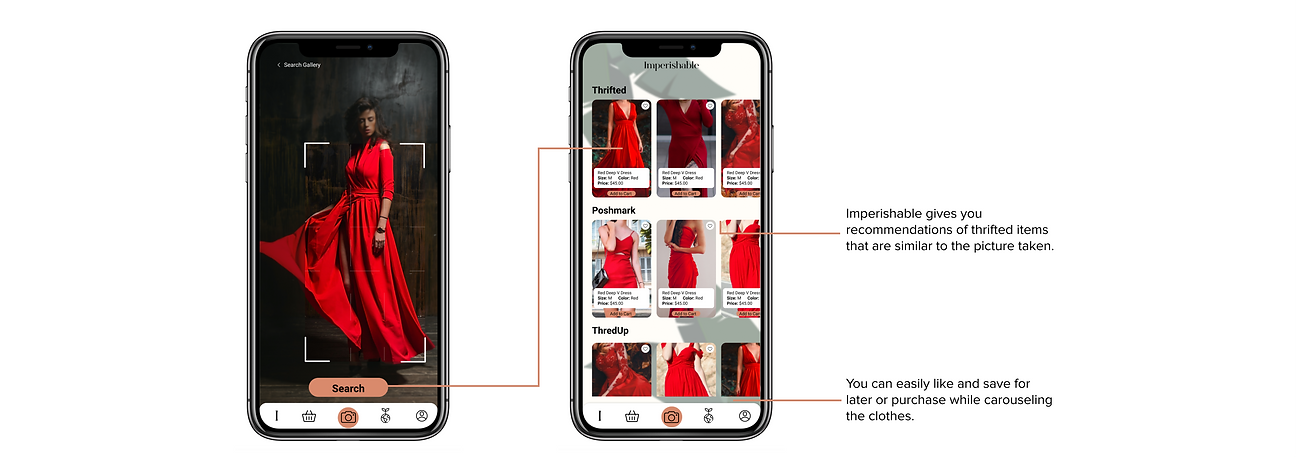
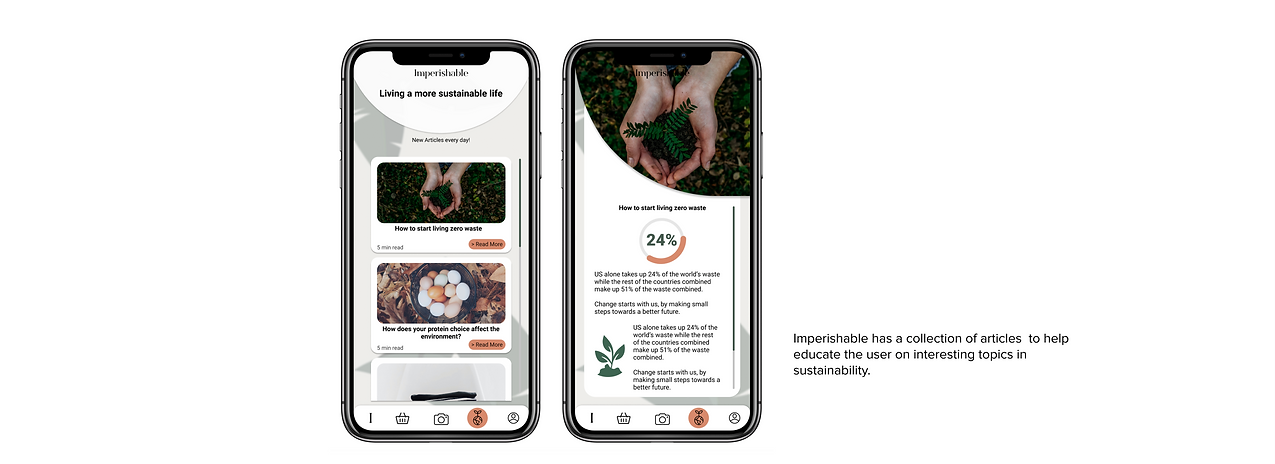
A shopping companion that surfaces sustainable alternatives alongside items people already want, lowering the barrier to ethical purchasing without asking people to compromise on aesthetics or convenience.
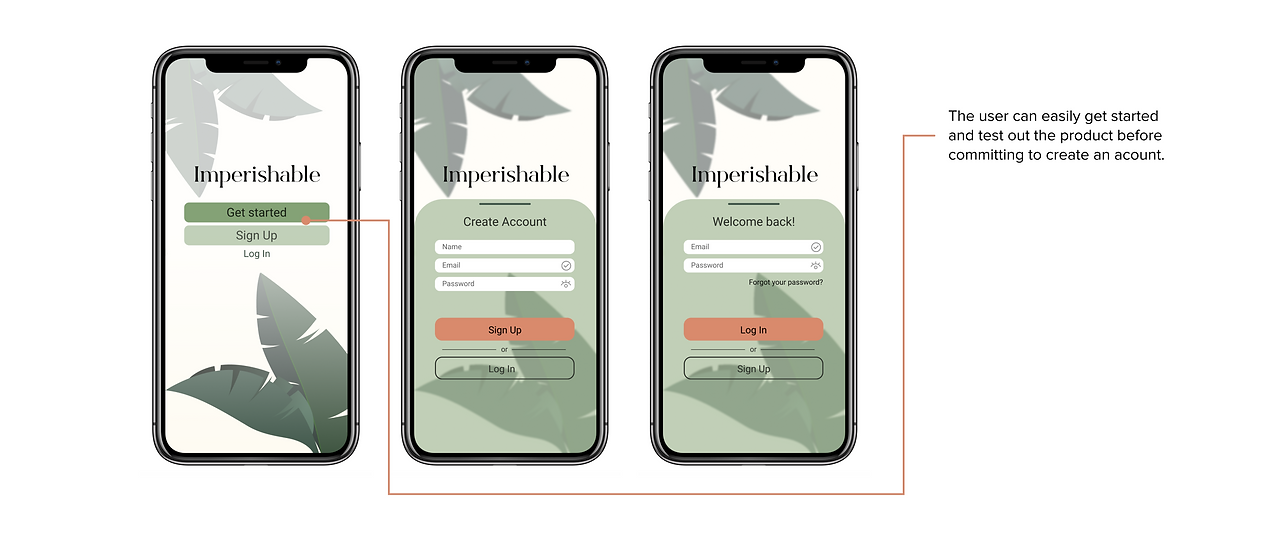
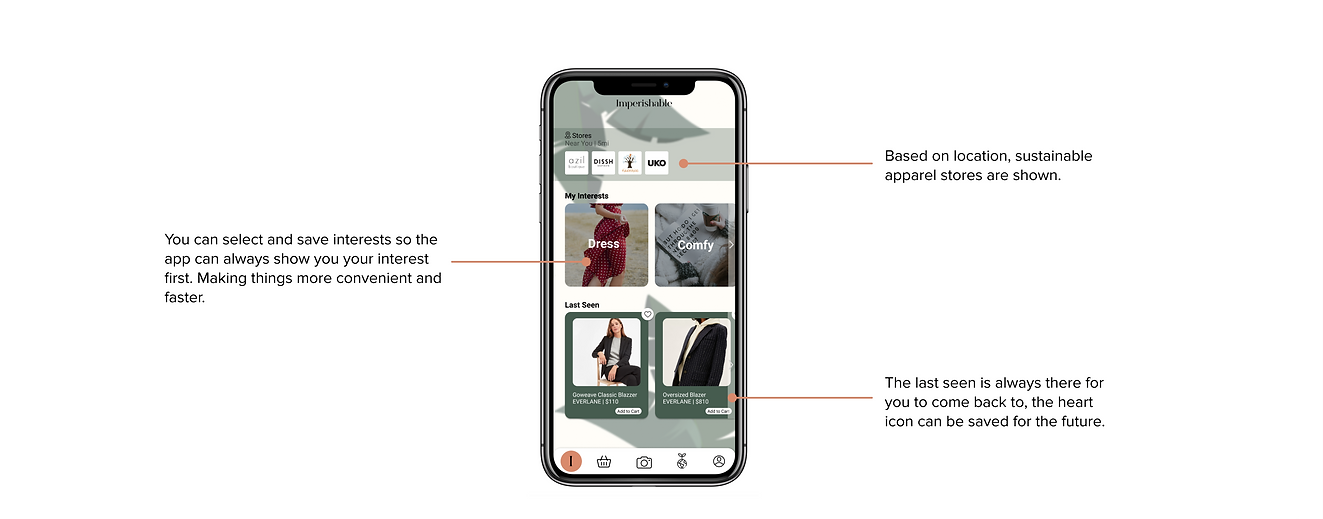
Alternative surfacing
Sustainable alternatives are presented side-by-side with the original item, same aesthetic, better impact.
Proximity filter
Local and nearby sustainable options are ranked first, which makes the choice feel more tangible.
Trust signal
Third-party verification data is surfaced inline, so users can validate brand claims without leaving the app.
Next steps
Research-first, design next.
This was a research-focused project and needs more work on the design system, creating more scenarios, and doing user testing.